
In the world of global shipping, clarity is everything. From who arranges transport to who covers which costs, Incoterms—or International Commercial Terms—are the rules that keep everyone on the same page. One of the most widely misunderstood but frequently used Incoterms is EXW (Ex Works).
Whether you’re just stepping into international trade or expanding your supply chain globally, understanding EXW can save you time, money, and unnecessary confusion.
Let’s break it down.

What Does EXW Mean?
EXW (Ex Works) is an Incoterm where the buyer assumes almost all responsibility for the goods—right from pickup at the seller’s location. This could be a factory, warehouse, or any other agreed-upon place.
Under EXW, the seller’s only obligation is to make the goods available at their premises. Ever
ything that follows—from loading, transportation, and customs clearance to delivery and insurance—is the buyer’s responsibility.
Key Responsibilities Under EXW
To make it clearer, here’s how tasks are split under an EXW agreement:
Seller’s Responsibilities:
- Pack and prepare goods for export
- Make goods available at the specified location (e.g., warehouse, factory)
Buyer’s Responsibilities:
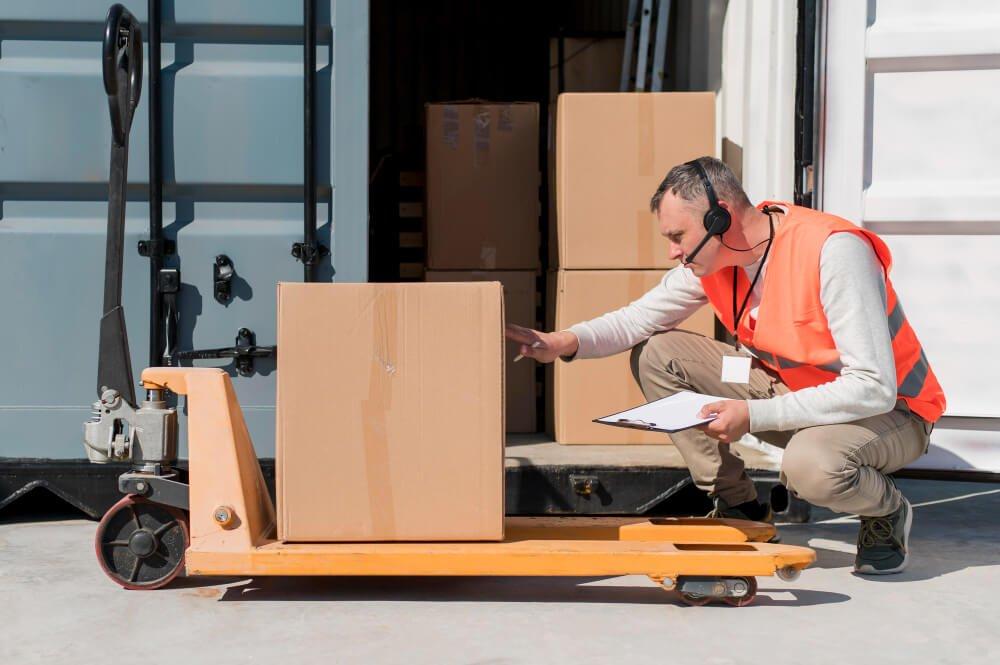
- Handle loading at seller’s premises
- Arrange for inland transport to port
- Manage export customs clearance (unless otherwise agreed)
- Book and pay for international shipping
- Cover import duties and customs at the destination
- Arrange final delivery to the destination
In short: The buyer does most of the heavy lifting.

When Should You Use EXW?
EXW works best when buyers want full control over the shipping and logistics process and are equipped to handle local regulations and pickup logistics in the seller’s country.
Here’s when EXW makes sense:
- You’re working with a freight forwarder like SailOn Logistics who can manage end-to-end transportation
- You’re shipping from a country where you already have local agents or partners
- You want transparency and control over costs from origin to destination
Pros and Cons of EXW
Let’s weigh the benefits and challenges:
Advantages for Buyers:
- Full control over logistics and costs
- Choose your own freight providers and routes
- Flexible for large-volume or multi-vendor sourcing
Challenges for Buyers:
- Must manage loading, documentation, and export clearance
- Complex in countries with strict export laws
- Risk of delays if seller refuses assistance beyond EXW terms

Common Misconceptions About EXW
- “EXW is always the cheapest option.”
→ While sellers offer lower quotes under EXW, buyers often incur higher overall costs due to additional responsibilities like export paperwork and transportation. - “The seller helps with loading.”
→ Technically, under EXW, loading the goods is the buyer’s job. Any help from the seller should be pre-agreed and documented. - “EXW works for air, sea, and road shipping.”
→ True! Unlike some Incoterms meant only for sea freight (like FOB), EXW is flexible across all transport modes.
How EXW Compares to Other Incoterms
Incoterm | Seller Responsibility | Buyer Responsibility | Best For |
|---|---|---|---|
EXW | Make goods available at premises | Everything else (loading, shipping, duties) | Buyers wanting full control |
FOB | Load goods on vessel, handle export | Freight + post-shipping costs | Sea freight with shared responsibility |
CIF | Shipping and insurance to destination port | Unloading + import duties | Buyers preferring turnkey delivery |
How SailOn Logistics Helps Simplify EXW Shipments
EXW gives you control, but that control comes with complexity. That’s where a reliable freight forwarder like SailOn Logistics becomes your greatest asset.
Here’s how we help:
- On-ground pickup coordination from seller’s premises, even in foreign countries
- Export documentation and clearance managed seamlessly
- Multi-modal transport solutions (FCL, LCL, air, door-to-door)
- Real-time updates so you’re never in the dark
- Cargo insurance and risk management options
With SailOn, you can enjoy the flexibility of EXW without the stress of managing every moving part yourself.
Final Thoughts
EXW might sound simple on paper, but in practice, it requires logistics know-how, reliable partners, and a clear plan. It offers buyers unmatched control over the shipping process—but only if they’re prepared to manage the responsibilities.
Need help navigating EXW or comparing it to other Incoterms? Whether you’re importing, exporting, or building a resilient global supply chain, SailOn Logistics is here to simplify it all.
Contact SailOn Logistics today to get expert support on EXW and all your international shipping needs. Let’s make global trade easier—together.